WhatsApp
5 WhatsApp Message Templates That Get Replies
Five WhatsApp message templates to respond to leads, follow up, confirm appointments, and re-engage opportunities — with tips to personalize each one.

·
Five WhatsApp message templates to respond to leads, follow up, confirm appointments, and re-engage opportunities — with tips to personalize each one.
Sending a WhatsApp message doesn't guarantee the other person will reply. Even when there's genuine interest, a conversation can stall because the message is too generic, arrives without context, contains too much information, or doesn't make clear what the contact should answer.
That's why an effective message doesn't depend on a magic phrase. Its outcome is tied to the timing of the send, the stage of the conversation, the information the contact already shared, and how easy it is for them to respond.
Below you'll find five WhatsApp message templates you can adapt to reach new leads, follow up, confirm appointments, and win back opportunities that stopped responding.
Before using any template, it helps to understand what makes a message easy to answer. In most cases, there are four key elements.
The person needs to know who is writing to them and why they're receiving the message. This matters most when the contact filled out a form, downloaded content, or requested information hours or days earlier.
Instead of opening with just "Hi, how are you?", it's better to mention the action that started the conversation.
The message should connect to the contact's interest, need, or previous interaction. The more it relates to what the person is looking for, the more natural it feels to continue the conversation.
Personalization isn't just about adding a name. It also means considering which product they asked about, what information they already received, and what stage they're at.
Each message should communicate one main idea. Long paragraphs, unnecessary explanations, and multiple questions all raise the effort required to respond.
Where possible, break the conversation into steps and ask for one piece of information per message.
Open-ended questions can make a person put off replying. Offering concrete options instead makes the decision easier.
For example, it's easier to answer "morning" or "afternoon" than to explain an entire week's availability.
These templates work as starting points. Before sending them, adapt the context, language, and next step to each contact.
This template works when someone fills out a form, requests information, or starts a conversation from an ad, landing page, or website.
Template:
Hi, [name]. I'm [advisor] from [company]. I saw you requested information about [product or service]. To point you in the right direction, are you looking for [option A] or [option B]?
Why it can work:
The message explains where the contact came from, briefly introduces the advisor, and asks an easy question to answer. It also avoids requesting too much information in the first interaction.
How to personalize it:
Use the options to identify a real need. For example, an education company might ask whether the person is looking for an in-person or online program. A services company might ask whether they need a solution for personal or business use.
Avoid opening with generic questions like "How can we help you?" when you already have information about the product or service they asked about.
This template helps restart a conversation after sharing a proposal, quote, catalog, presentation, or document.
Template:
Hi, [name]. I wanted to follow up on the proposal I sent about [product or service]. Based on what we discussed, option [X] could be the best fit for [need]. Would you like to go over that, or would you rather look at another option?
Why it can work:
It doesn't just ask whether the person saw the information. It recovers the context, highlights a recommendation, and offers two paths forward.
Messages like "Did you get a chance to look?" or "Looking forward to hearing from you" tend to put all the effort on the contact and don't give a concrete reason to respond.
How to personalize it:
Mention the part of the proposal that addresses the contact's main need. It could be the timeline, the scope, a feature, the payment terms, or the expected outcome.
The follow-up will land better when it shows the previous conversation was actually understood.
This template works when a conversation stalled after an initial inquiry, a sales presentation, or sending information.
Template:
Hi, [name]. Following up on our conversation about [topic]. Not sure if you're still weighing this option or if you'd rather pick it back up later. Which of these fits your situation best?1. I want to continue.2. Reach out to me later.3. I'm no longer interested.
Why it can work:
The message acknowledges the timing may not have been right and lets the person respond without pressure. The options lower the effort needed to reply and help you understand the contact's actual situation.
Allowing a negative answer is useful too. It avoids unnecessary follow-ups and helps keep a more organized contact base.
How to personalize it:
Include the product, service, or need that was being evaluated. You can also adapt the options to your sales cycle — for example, offering to pick the conversation back up next month or after a specific date.
Avoid sending this message repeatedly. If there's no response, the next outreach should bring something new.
Confirmation messages should include all the information needed to avoid confusion and let the person confirm or reschedule easily.
Template:
Hi, [name]. Writing to confirm our meeting about [topic] tomorrow, [date], at [time]. Does that time still work, or do you need to reschedule?
Why it can work:
The person can quickly identify the date, time, and purpose of the meeting. The closing question also makes it easy to confirm or request a change with a short reply.
Timely reminders can help reduce no-shows, especially when they don't force the contact to go looking for the meeting details again.
How to personalize it:
Add the access link or address when needed. If the meeting requires any preparation, mention it briefly.
You can also offer two new time slots when the person needs to reschedule, instead of asking them to send their full availability.
Simply asking "Are you still interested?" doesn't always give enough of a reason to restart a conversation. An effective re-engagement message needs to bring something new.
Template:
Hi, [name]. Last time we talked about [need]. I'm reaching out because we now have [relevant update], which could help you [specific benefit]. Want me to walk you through how it would work for you?
Why it can work:
The message connects a previous need to relevant news. The conversation isn't restarted just because the advisor needs a reply, but because there's information that could actually be useful to the contact.
How to personalize it:
The update can be a new plan, new availability, a use case, a service improvement, or information that addresses a previous objection.
Make sure the update relates directly to the person's interest. Sending the same update to your entire list can make the message feel like a mass blast.
Good personalization considers more than just a name. Before sending a message, review:
Segmenting contacts matters too. A new lead shouldn't get the same follow-up as someone who already received a quote, booked an appointment, or said they'd rather pick things back up later.
A few habits can make even an interested contact decide not to reply:
The goal isn't to pressure the contact, but to make it easy and relevant to keep the conversation going.
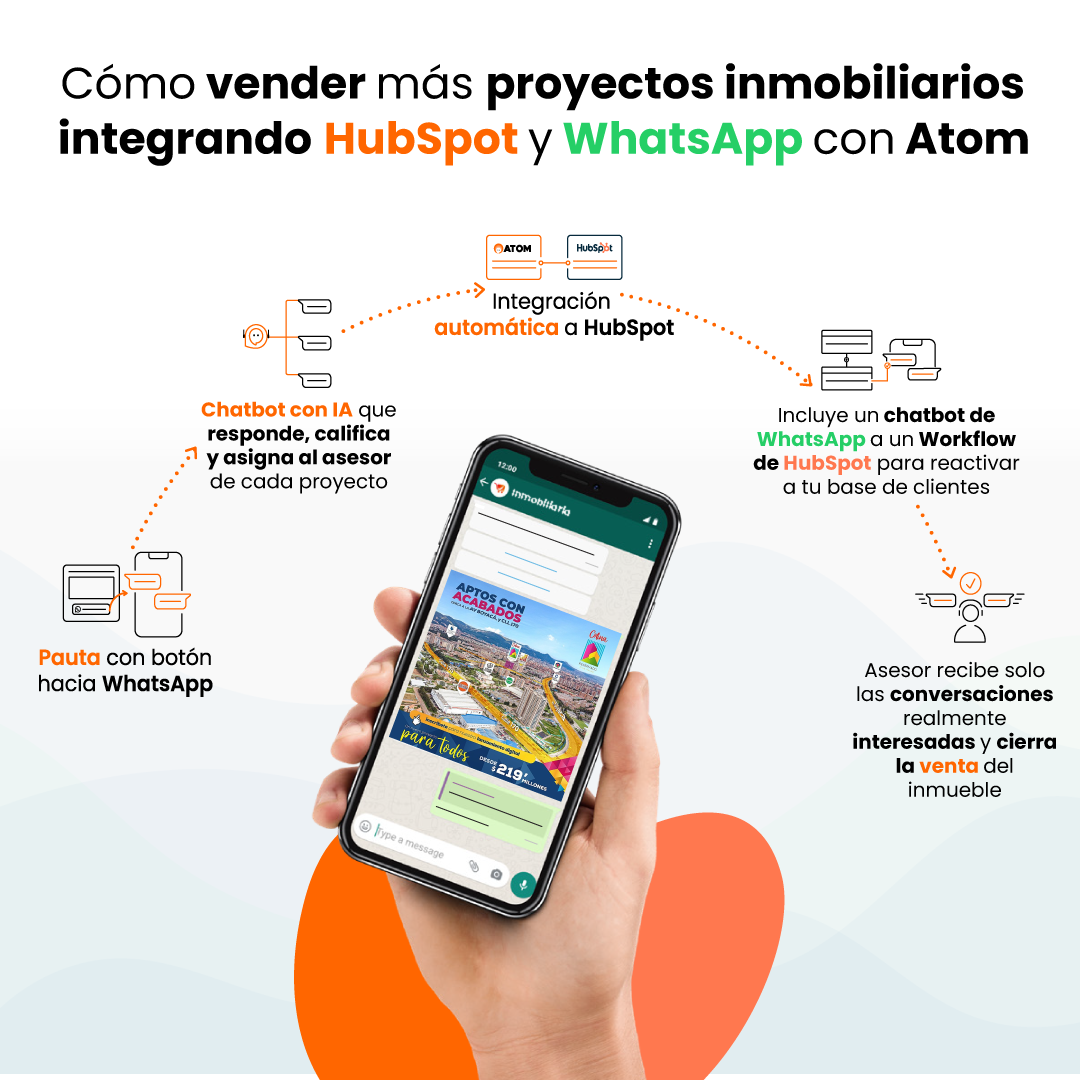
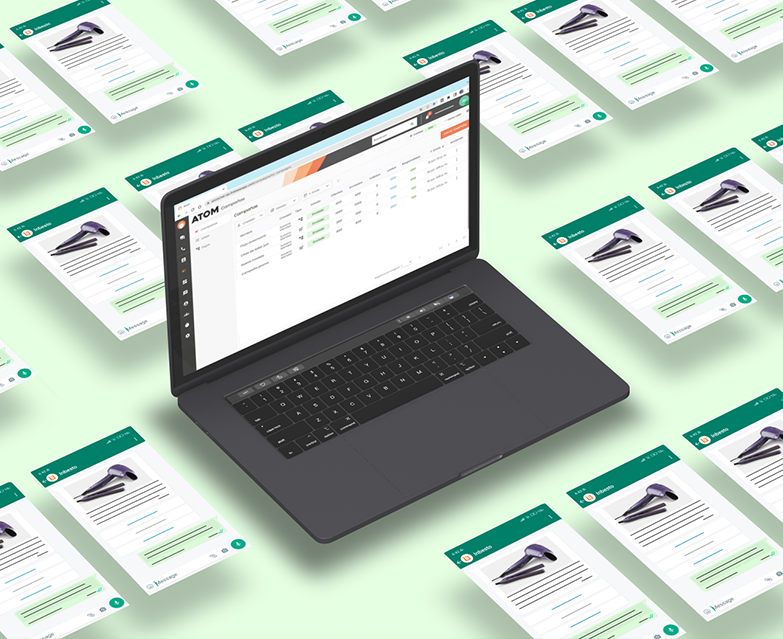
Automating WhatsApp doesn't mean sending the same text to everyone. A well-configured setup can identify where a contact came from, recognize their interest, classify them by stage, and trigger follow-ups based on their actions.
It can also use information from the conversation to personalize messages, detect when an advisor needs to step in, and log every step in the CRM.
With Atom, businesses can pick up on the signals in each conversation and trigger the right message based on interest, stage, and each lead's actions — keeping WhatsApp follow-up on context and helping more conversations move forward.
WhatsApp message templates help structure clearer conversations, but they shouldn't be used as rigid text to copy and blast out.
Their effectiveness depends on relevance, personalization, timing, and how easy the next step is. Instead of sending more messages, the goal should be giving a clear reason to keep each conversation going.
Discover how Atom can help you automate personalized follow-ups and turn more conversations into sales opportunities.
Talk to a specialist.
Introduce yourself, explain why you're reaching out, and ask a simple question tied to the customer's need or previous action.
Recover the context, give a relevant reason to continue, and offer easy-to-answer options without pressuring the contact.
There's no universal number. Frequency depends on the sales stage, the context, and the value each new message adds.
Yes. Automation can trigger messages based on each contact's behavior, interest, and stage, while keeping the context of the conversation.
Habla con un asesor hoy y descubre cómo Atom puede transformar WhatsApp en tu canal de ventas más poderoso.