Many companies already have most of the technology they need to manage the relationship with their customers. They use a CRM, receive conversations on WhatsApp, invest in digital campaigns, manage commercial information across different platforms, and rely on tools for inventory, payments, or scheduling.
The problem shows up when all of those tools work separately from one another.
A customer can arrive from an ad, chat with the company on WhatsApp, share information about what they're looking for, and hours later end up talking to a rep who knows nothing about the previous interaction. Even if the company is present across different channels, the experience is still fragmented.
An omnichannel strategy powered by AI aims to fix exactly that disconnect. The goal is no longer simply adding more channels, but making sure information, context, and actions can carry through as the customer moves along their journey.
With the addition of autonomous AI agents, that integration can go even further. AI can do more than answer a question: it can interpret the user's intent, look up information in other systems, carry out specific actions, and decide what the next step should be within the rules the company has defined.
What does having an omnichannel strategy actually mean?
It's common to associate omnichannel with being present on WhatsApp, social media, email, phone, and other touchpoints. However, having multiple channels available doesn't necessarily mean delivering an omnichannel experience.
The difference lies in what happens to the information when a person moves from one channel to another.
In a multichannel strategy, channels can exist at the same time but operate independently. A person might start a conversation on WhatsApp and then have to repeat their question, their data, and their preferences when they reach a different rep or channel.
In an omnichannel strategy, that information stays available and can follow the customer through the entire process. Conversation history, products they looked at, detected intent, and actions already taken are all part of the same context.
That's why omnichannel really comes down to three things: connected data, shared context, and continuity.
Someone who starts by asking about a product shouldn't have to explain again what they need once the conversation moves to a new stage. Likewise, a salesperson should be able to step in already knowing what happened before, what information the customer received, and how advanced the opportunity is.
The value isn't in how many channels a company uses, but in its ability to make all of them part of a single experience.
Why WhatsApp sits at the center of an omnichannel strategy
A significant part of the buying journey can start outside of WhatsApp. A customer discovers a product on Instagram, sees an ad on Google, visits a website, or fills out a form.
However, many of those interactions eventually turn into conversations.
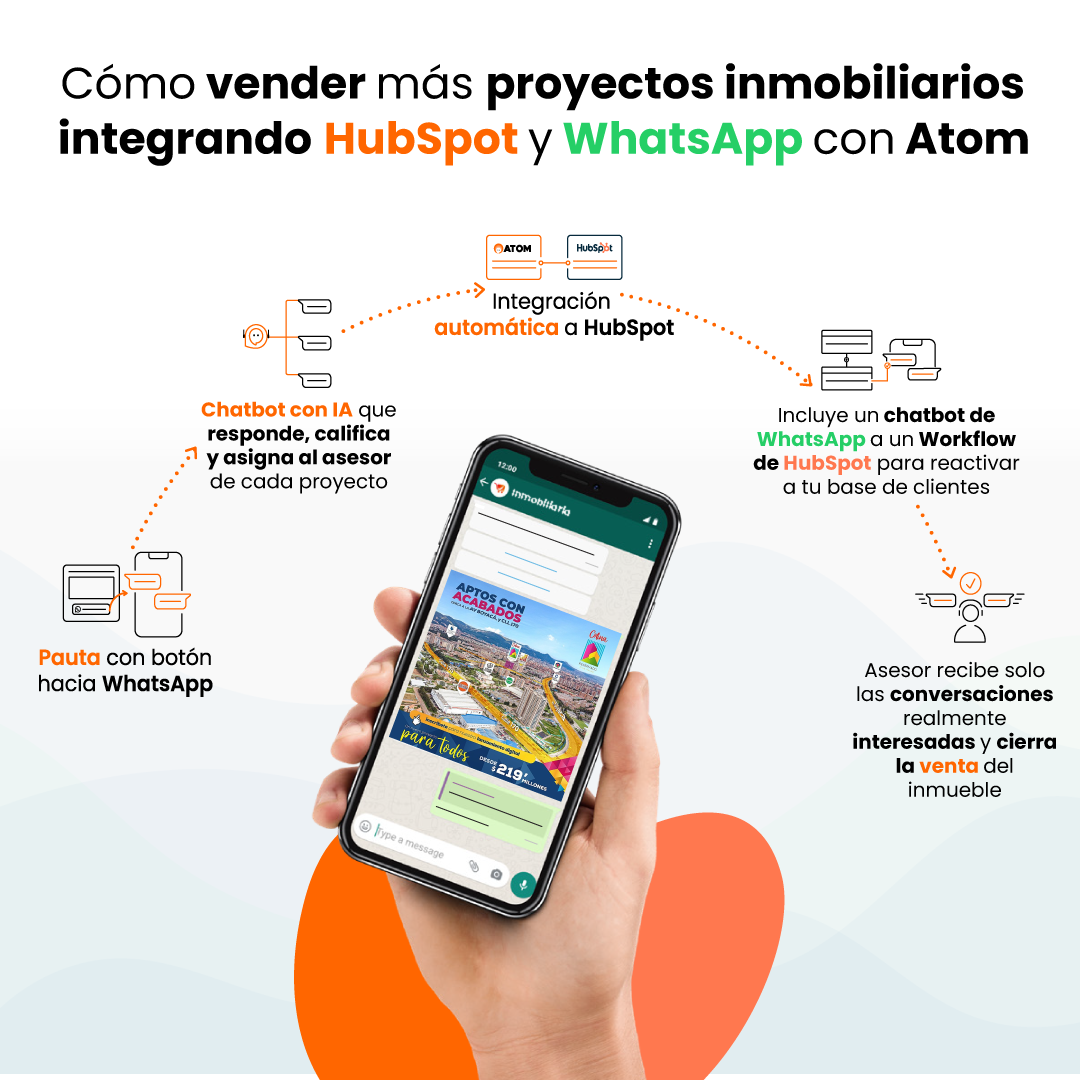
That's where WhatsApp can act as the connection point between the intent generated by a campaign and the systems the organization uses to manage its commercial process.
The journey can be mapped out like this:
Campaign → WhatsApp → conversation → qualification → action → CRM → sale
The difference shows up when each stage is connected to the next one.
If a person reaches WhatsApp from a specific campaign, that information can be kept throughout the conversation. If they then show interest in a product, book an appointment, or request a quote, those actions can be logged in the CRM. That way, marketing and sales aren't working off isolated interactions, but a journey that can be tracked from the source all the way to the outcome.
WhatsApp then stops being just a channel for exchanging messages and becomes a conversational interface connected to the rest of the company's systems.
What is an autonomous AI agent?
An autonomous AI agent is a system capable of interpreting what a person needs and acting on that information within certain limits set in advance.
That marks an important difference from systems built only to deliver answers.
An AI agent can understand a customer's intent, retrieve relevant information, check different sources, and decide what action should come next. It can also carry out specific tasks, hold context throughout the conversation, and hand the interaction off to a person when the situation calls for it.
For example, faced with a sales inquiry, the agent could identify the product of interest, check availability in an internal system, ask only for the data it actually needs, and offer an available time slot for an appointment.
Autonomy, however, doesn't mean the AI should operate without any control. Companies can define what information it's allowed to access, which actions it's authorized to perform, which decisions need approval, and in which situations a team member should step in.
Autonomy delivers more value when it comes paired with clear rules.
From an agent that answers to an agent that takes action
The evolution of conversational AI can be understood by looking at what happens after the customer asks a question.
At an early stage, AI simply answers using information that was configured beforehand. At a more advanced level, it can understand intent and adapt its response to the context of the conversation.
The next step is connecting it to other sources of information. At that point, the agent can check inventory, CRM, calendars, knowledge bases, or other systems to find a suitable answer.
The most important difference appears when, beyond looking up information, it can also take an action.
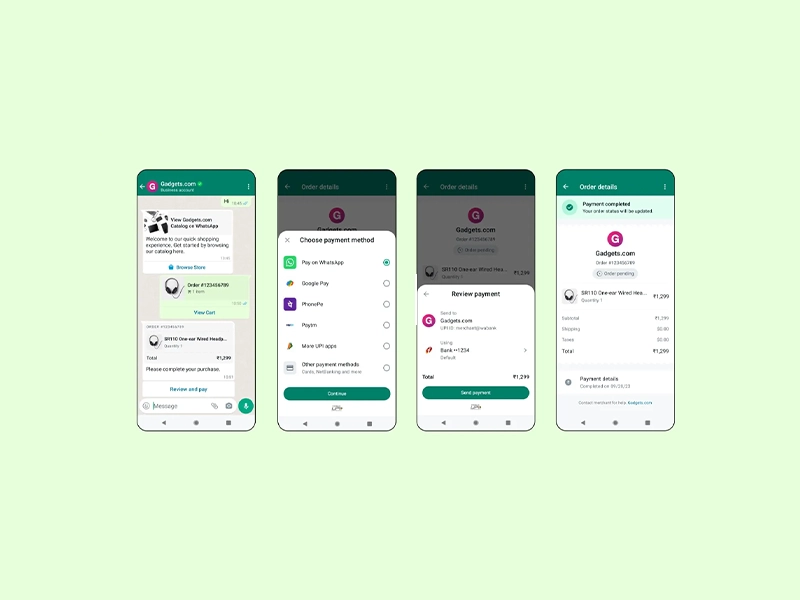
That means a conversation doesn't always have to end with just an answer. It can end with a quote generated, an appointment booked, a record updated in the CRM, or an opportunity handed off to the right salesperson.
It can also be used to check an order's status, revive conversations that stalled, or continue a process that started on a different channel.
At that point, AI stops being just an interface for answering questions and starts participating directly in the sales operation.
How AI agents connect to an omnichannel strategy
Understanding how this relationship works doesn't require diving into complex technical architecture. What matters is understanding how information and actions flow.
The process starts across the different entry channels. A person can arrive from a campaign, a website, a social network, or directly through WhatsApp.
Once the conversation begins, the AI agent interprets the intent and uses the available context to figure out what it needs to do. If it needs additional information, it can query business systems such as a CRM, an ERP, an inventory tool, a calendar, or a knowledge base.
Based on that information, it can carry out the appropriate action. Depending on the case, it might qualify the prospect, generate a quote, update a record, book an appointment, or hand the conversation over to a rep.
Finally, the interaction's data can flow back to the CRM or the relevant system to keep the process traceable.
What matters is that the conversation doesn't stay siloed inside WhatsApp. Every interaction can feed the company's systems and, at the same time, draw on information coming from them.
An example of an omnichannel AI experience on WhatsApp
Picture someone interested in buying a vehicle.
The first contact happens when they see a digital ad and click to chat on WhatsApp. The AI agent recognizes which campaign they came from and starts to understand what type of vehicle they're looking for.
During the conversation, it identifies a specific model and checks available inventory. Rather than just replying that the vehicle is in stock, the agent can move the process forward, collect the information it needs, and propose times to visit a dealership.
The person picks an option and the appointment gets booked.
All of that information is also logged in the CRM. When the salesperson receives the opportunity, they don't need to start by asking which vehicle the prospect is interested in or when they want to visit. They can review the history, see which product was selected, understand what questions were asked earlier, and see the appointment that's already on the calendar.
From the customer's perspective, the conversation flowed naturally. From the company's perspective, different channels, systems, and people took part in the same process without losing context along the way.
That's the real value of an omnichannel experience.
What benefits come from combining omnichannel and autonomous AI agents
The first benefit is speed. A conversation can keep moving forward even when a salesperson isn't available at that moment, since AI can resolve certain stages of the process immediately.
It also cuts down on the repetitive tasks teams need to handle manually. Frequent questions, updating information, initial qualification, or scheduling appointments can all be resolved within the same interaction.
This doesn't remove people from the equation. On the contrary, it lets salespeople receive opportunities with more context and spend their time on situations where they genuinely add the most value.
Another important benefit is traceability. When campaigns, conversations, CRM, and sales results are connected, it becomes possible to analyze not just how many messages the company received, but which interactions actually generated opportunities and sales.
Finally, an organization can grow its capacity to handle conversations without every increase in volume requiring an equivalent increase in manual work.
What a company needs to implement an AI-powered omnichannel strategy
Adding AI to WhatsApp doesn't automatically turn an operation into an omnichannel one. Before implementing the technology, it's necessary to understand how the process should work.
The company needs to identify which channels are part of the customer journey and what information needs to stay available across them. It's also important to define which systems hold the data needed to respond, and which ones should be updated after each interaction.
Another key point is separating which actions the AI can carry out automatically from those that require human intervention.
For example, an agent might check availability and book an appointment on its own, but a negotiation involving special commercial terms may need a salesperson's involvement.
The implementation also has to account for how information will be logged in the CRM, which metrics will be used to evaluate results, and what permissions the AI will have across the different systems.
That's why an AI-powered omnichannel strategy takes a lot more than simply installing a tool. It requires designing how conversations, data, decisions, and actions should connect to one another.
Autonomy with control: setting the boundaries for an AI agent
One of the main challenges when talking about autonomous agents is avoiding the idea that autonomy means handing every decision over to the AI.
In a proper implementation, the organization clearly defines the boundaries of what the agent can do.
The agent might only have access to certain sources of information, be able to perform specific actions, and operate under certain commercial rules. Companies can also set up cases where an action requires approval, or where a conversation needs to be handed to a person right away.
An agent could, for example, check inventory, share availability, and book an appointment without any human involvement. However, if the customer asks for commercial terms outside the parameters that were set, the conversation can be handed off to a salesperson along with all the prior context.
This combination of autonomy and control makes it possible to automate what's repetitive or predictable without losing oversight over the decisions that require human judgment.
How to measure an AI-driven omnichannel strategy
Metrics for an omnichannel strategy shouldn't be limited to how many conversations were handled.
It's necessary to look at how those conversations contribute to the sales process. Relevant metrics can include the conversion rate from conversation to lead, from lead to opportunity, and from opportunity to sale. It's also useful to measure response time, the number of appointments booked, recovered opportunities, and the conversations that need to be handed off to a rep.
When there's traceability across campaigns, WhatsApp, and the CRM, a company can go further and analyze which channels or campaigns produce better opportunities, what the cost per lead is, and what it actually costs to generate a sale.
That way, AI stops being measured only by its ability to respond and starts being evaluated by its contribution to the business.
The future of omnichannel will be increasingly autonomous
For years, the goal of many omnichannel strategies was to connect channels. The next step is connecting the data, decisions, and actions that sit behind those channels as well.
This evolution can be understood as a process where companies first connect touchpoints, then the information available, and finally the intelligence needed to decide what should happen next.
Autonomous AI agents can become that layer, capable of using information coming from different systems and acting on it within a conversation.
That means omnichannel stops depending exclusively on a person manually switching between platforms, and starts working as a more continuous process instead.
AI on WhatsApp connected to the business
Atom lets you build AI Agents on WhatsApp that can work connected to an organization's systems and tools to use information, hold context, and carry out actions during a conversation.
This means AI isn't limited to answering questions. Depending on the operation, it can help qualify leads, generate quotes, book appointments, revive stalled opportunities, look up information available in other systems, and log interactions inside the CRM.
When an opportunity needs human involvement, the rep can pick it up with the context they need to keep the conversation going without starting from scratch.
On top of that, connecting campaigns, conversations, and sales results makes it possible to build more complete traceability and understand which interactions actually contribute to generating opportunities and sales.
Omnichannel connects the experience. Autonomous AI agents also connect the decisions and actions needed for that experience to keep moving forward.
Want to connect WhatsApp to your systems and turn your conversations into commercial actions?
Find out how Atom's AI Agents can integrate with your operation to qualify leads, execute actions, and maintain traceability across the entire sales process. Schedule a conversation with our team.
Frequently asked questions about omnichannel strategies and AI agents
What is an omnichannel strategy?
An omnichannel strategy connects the different channels a company uses so that information and context can carry through the entire customer journey. Its goal isn't just to offer multiple touchpoints, but to keep each interaction from operating in isolation and let customers move forward without repeating themselves.
What's the difference between omnichannel and multichannel?
Multichannel means a company uses different channels to communicate with its customers, even if those channels operate independently. Omnichannel aims to connect them. That way, information gathered on WhatsApp, for example, can stay available once a salesperson, a CRM, or another system gets involved within the same process.
What is an autonomous AI agent?
An autonomous AI agent is a system capable of interpreting a request, looking up information, making certain decisions, and carrying out actions within rules set by an organization. It can hold the context of a conversation and hand an interaction off to a person when it runs into a situation that requires human involvement.
How does an AI agent integrate with WhatsApp and a CRM?
The agent can use WhatsApp as the conversation interface and connect to the CRM to look up or log information. That way, it can draw on existing data during the interaction and update the customer's record with new information, actions taken, or outcomes from the conversation.
What processes can an AI agent automate on WhatsApp?
It depends on the integrations and rules each company sets up. An AI agent can help answer questions, qualify leads, check availability, generate quotes, book appointments, update information in a CRM, revive opportunities, or hand conversations off to salespeople with the context they need to keep the process going.